In this article
Need a little support with this?
Rachel’s work is shame-free, direct, and grounded in therapy-informed tools for sex, relationships, and mental health.
Shame-free note: Use this article as a starting point, not a scorecard. Take what helps, leave what does not, and come back to the parts that deserve more care.
It’s time to break the sex drive myth. We’re going to get into what really goes into our libidos. We’ll discuss how they can be so easily affected. Also, how we each have specific needs to increase our sexual desire. Hint: it’s probably not what you think. Once again, the media we grew up consuming did us real dirty when it comes to *what should turn us on*. By the way, most shoulds are dumb.
Debunking the Term *Sex Drive*
Is it just me, or has the term sex drive become a little.. shamey?
Let me elaborate…
Typically, when we use this phrase, we say something like, “My partner has a lower sex drive than I do.” Or “I have a lower sex drive than my partner, and I know they wish we had more sex.”
Do you see how these examples can be both true and not helpful?
It makes it seem like something is broken and needs fixing.
The answer is more straightforward than it seems, and it’s this: we weren’t taught how to listen to what turns us on. Instead, we were taught certain things should be automatic turn-ons and that if we don’t feel “ready” for sex, something is wrong with us.
We’re taught that spontaneity, passion, quickies, and romance should always be sexy and make us feel automatically ready for sex. But for many people, it can look like planning, cuddles, heart-to-hearts, and massages— you name it!
We aren’t taught to ask each other (or ourselves, for that matter), “hey, what really turns you on and makes you feel present in your body?”
Libido is also a word used to describe our sex drive. In my opinion, it’s often used out of context. Libido & sex drive (we’ll get into it) aren’t as black or white as they may seem.
Our libido, aka sex drive (like everything else in life), is affected by our surroundings and everyday life.
This — this right here — could make a world of difference in de-shamifying and understanding each of our uniquely functioning bodies. Instead of shaming, we’d learn to listen to what our bodies are constantly saying. Consequently, we’d be better able to communicate those feelings to our partners.
Part of this understanding is learning our personal sexual brakes and accelerators.
What Are Sexual Brakes & Accelerators?
Learning our sexual brakes and accelerators, I kid you not, is an actual game-changer for your concept of sex. Thus, it changes your sex life.
Here are the definitions:
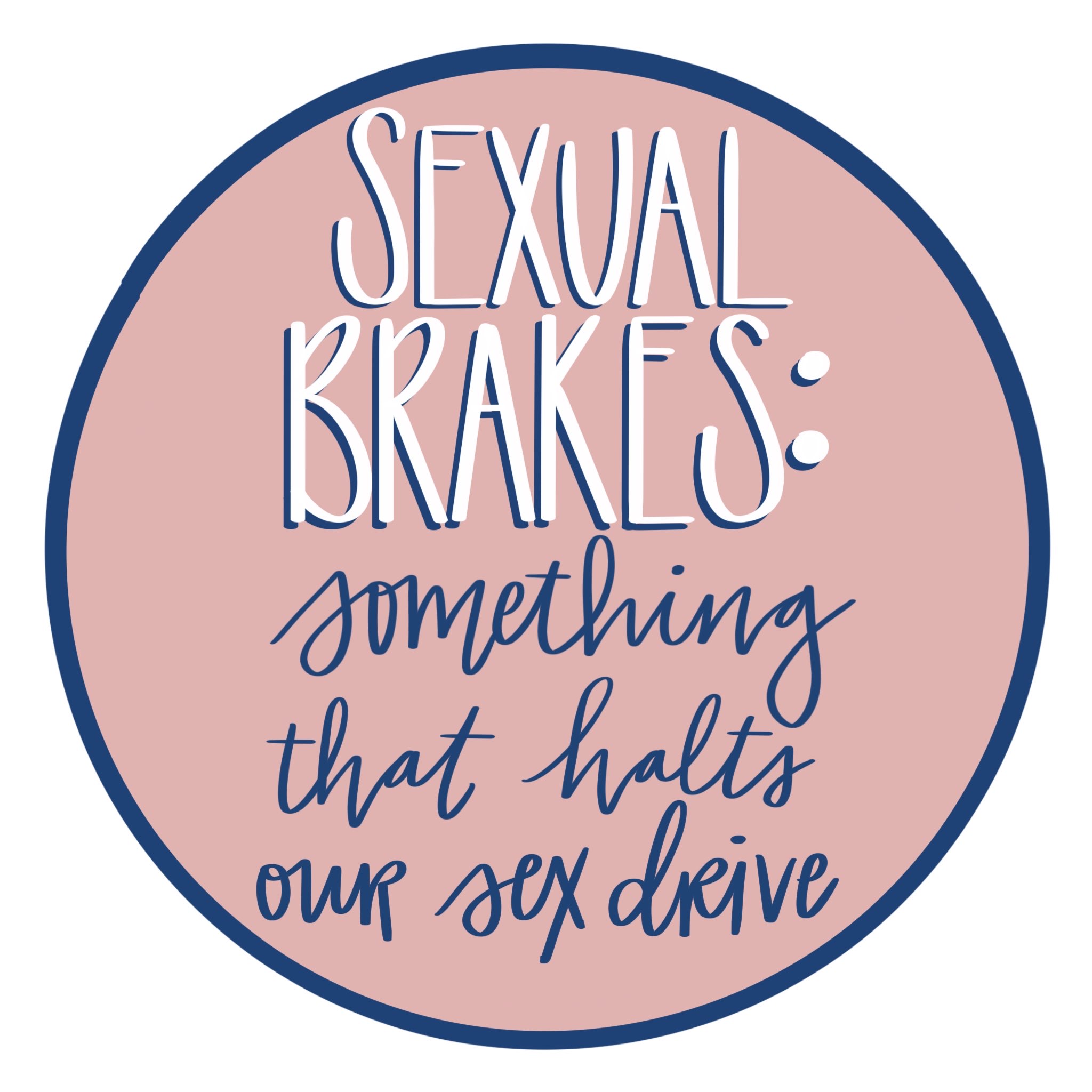
Sexual brake: Something that halts our sex drive, doesn’t help us feel present in our bodies, and makes it difficult for us to feel “in the sexy mood.” Ex: A dirty house, being rushed, a rough day at work, quickies— you get the idea.
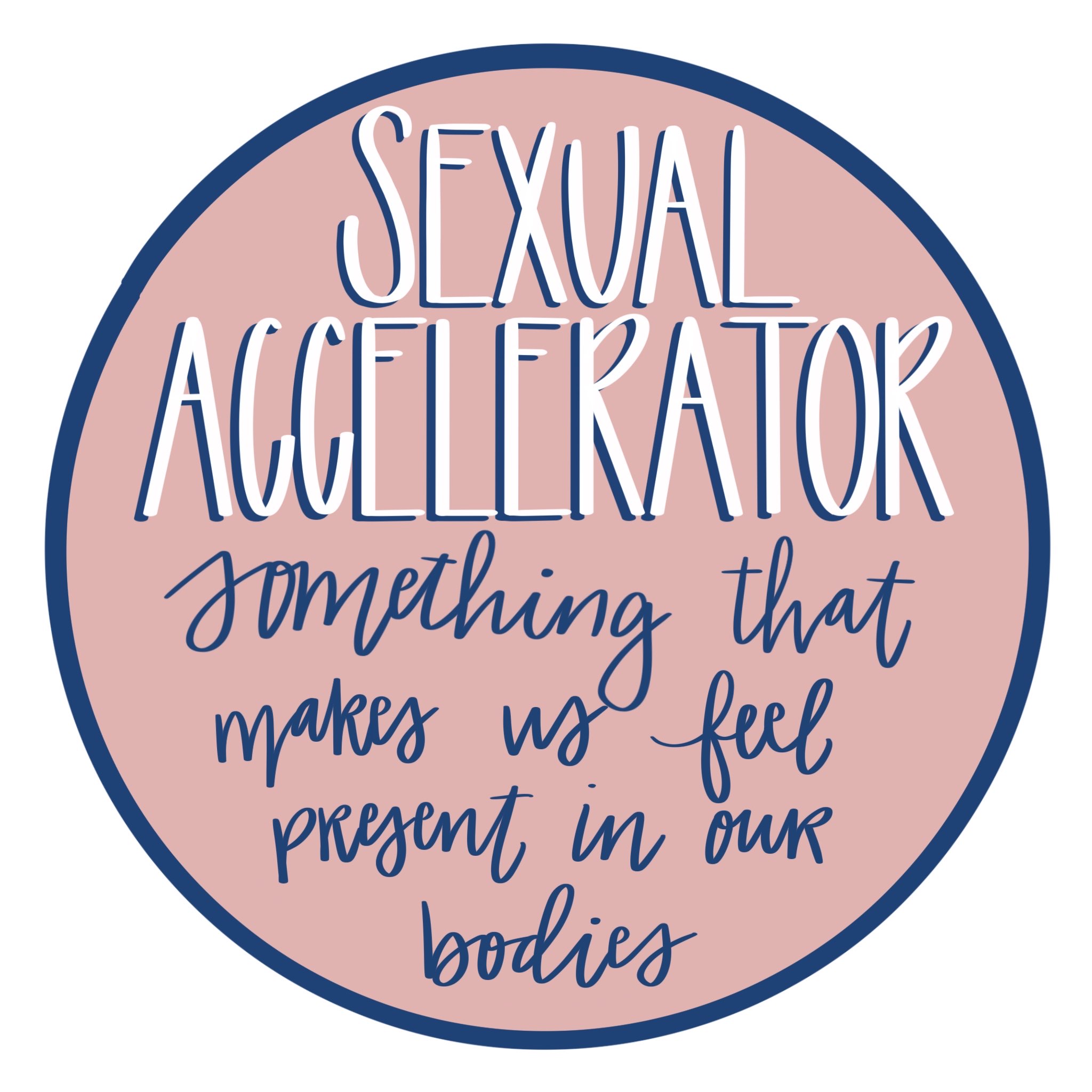
Sexual Accelerator: Something that makes us feel present in our bodies, excites our sex drive, and makes us inherently feel a little spicy. Ex: Cooking dinner with your partner, exercising, deep conversations, cuddling, massages— see where this is going?
Now, what’s vital to remember is everyone’s brakes and accelerators are different. Two people who are banging and love banging each other could have very different ways of getting into the said mood to bang. It’s just the reality because we are all so different!
How does one discover their sexual brakes and accelerators?
I’m so glad you asked. Firstly, it’s essential to take note of what helps you feel present in your own body. If you aren’t sure, I always encourage my clients to make an actual, physical list.
Take note of everything that makes you feel good in your body and possibly sensual for one week. Then, take note of everything that makes you feel the exact opposite! This is important because it helps us better communicate what we need /like/want/don’t want to our partners.
For example, I feel very sensual when my partner and I hang out, have deep or interesting conversations, cuddle, etc. AND when I take time to care for myself (yoga, skincare, routine, eating well).
On the flip side, if I am stressed and feeling disconnected from my body and myself, it will be way more challenging for me to feel ready for sex automatically. Especially sex, I will feel present for. There may be some steps I need to take before sex is initiated to get my body feeling a little saucier.
Our Sexual Excitation System (or SES, for short)
Emily Nagoski, Ph.D., is the ultimate teacher of all things around sexual brakes & accelerators. In her infamous book, Come As You Are, she discusses our SES and SIS.
Our SES is our Sexual Excitation System, or, in simpler terms, the accelerator of your sexual response.
Here’s what Emily says about our SES:
“It helps receive information about sexually relevant stimuli in the environment—things you see, hear, smell, touch, taste, or imagine— and sends signals from the brain to the genitals to tell them, “Turn on!” SES is constantly scanning your context (including your own thoughts and feelings) for things that are sexually relevant. It is always at work, far below the level of consciousness. You aren’t aware that it’s there until you find yourself turned on and pursuing sexual pleasure.”
Nagoski, Emily. Come as You Are: The Surprising New Science That Will Transform Your Sex Life.
Our SIS, our Sexual Inhibition System, is our sexual brake(s).
“Inhibition here doesn’t mean “shyness” but rather neurological “off” signals. Research has found that there are actually two brakes, reflecting the different functions of an inhibitory system. One brake works in much the same way as the accelerator. It notices all the potential threats in the environment— everything you see, hear, smell, touch, taste, or imagine— and sends signals saying, “Turn off!” It’s like the foot brake in a car, responding to stimuli in the moment. Just as the accelerator scans the environment for turn-ons, the brake scans for anything your brain interprets as a good reason not to be aroused right now— risk of STI transmission, unwanted pregnancy, social consequences, ect. And all day long it sends a steady stream of “Turn off!” messages. This brake is responsible for preventing us from getting inappropriately aroused in the middle of a business meeting of at dinner with our family. It’s also the system that throws the Off switch if, say, in the middle of some nookie, your grandmother walks in the room.”
Nagoski, Emily. Come as You Are: The Surprising New Science That Will Transform Your Sex Life.
Take Action

Now that we’ve deep-dived into what brakes and accelerators are, I encourage you to make a list of things that get you in the mood and things that easily get you out of the mood. In other words, make a list of your accelerators and brakes.
Having this list is so helpful for yourself. It’s also great for communicating with your sexual partners about how your brain works and what your body needs to feel spicy!
Foreplay (It’s Probably Not What You Think!)
A contributor to sexual brakes can be the wrong kind of foreplay. Before I lose you, I don’t mean the hetero-normative type of foreplay that is actually just referring to outercourse play (ex, oral sex).
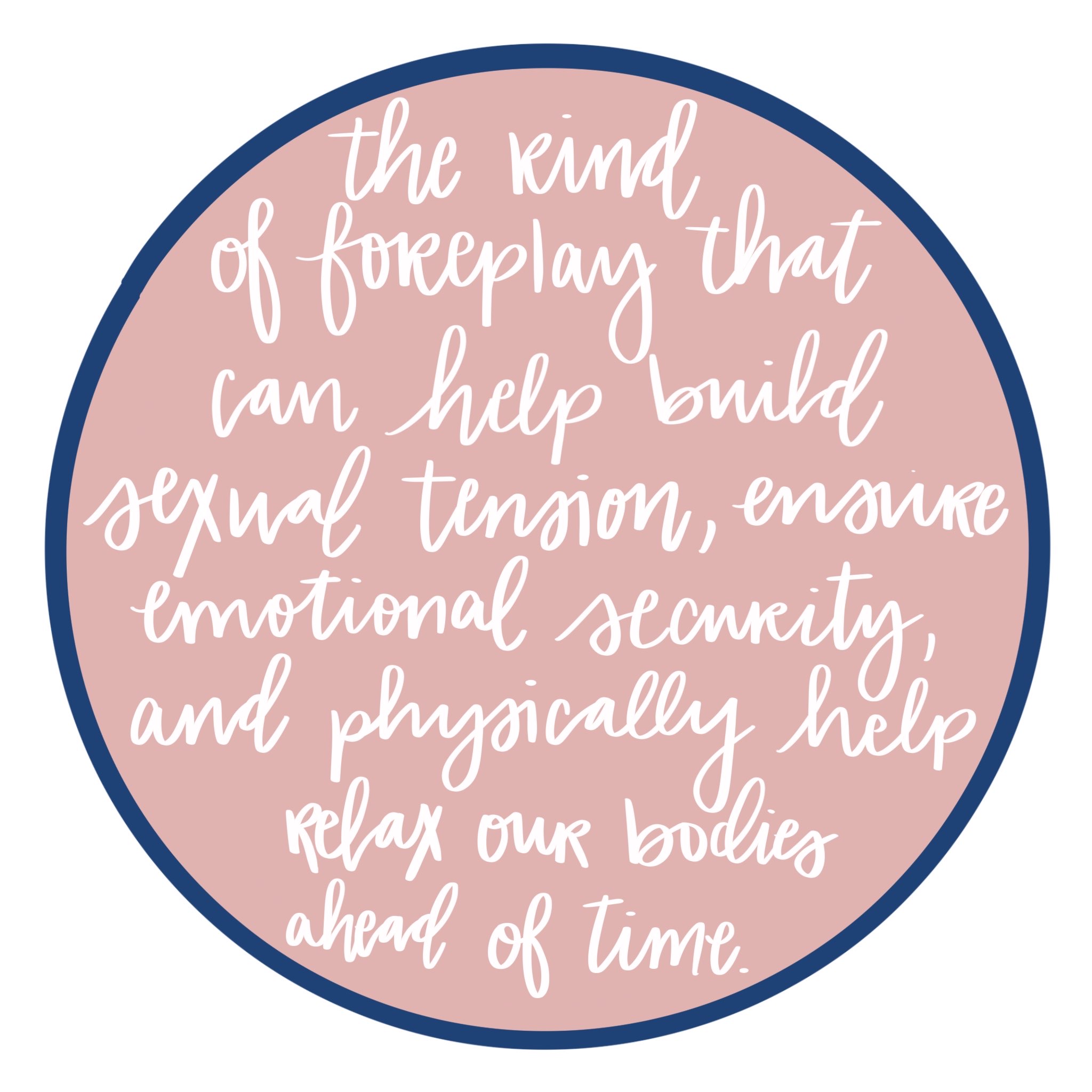
I’m referring to the kind of foreplay that can help build sexual tension, ensure emotional security, and physically help relax our bodies ahead of time.
Let me explain— some people love the spontaneity of sex, while others don’t. I think I’m one of those who don’t— unless I’m already feeling super connected to my partner (and my body).
My partner and I are very affectionate (any other physical touch love languages out there?)— we are always kissing, hugging, smacking each other’s booties, and cuddling when we’re sitting on the couch. What I recently realized is that this is part of my necessary foreplay!
Not only does it make me feel connected to my partner, but it also helps me feel desired and present in my body ahead of sexy time. For many people (myself included), feeling desired or wanted throughout the day helps me feel far more confident and excited about sex in the moment.
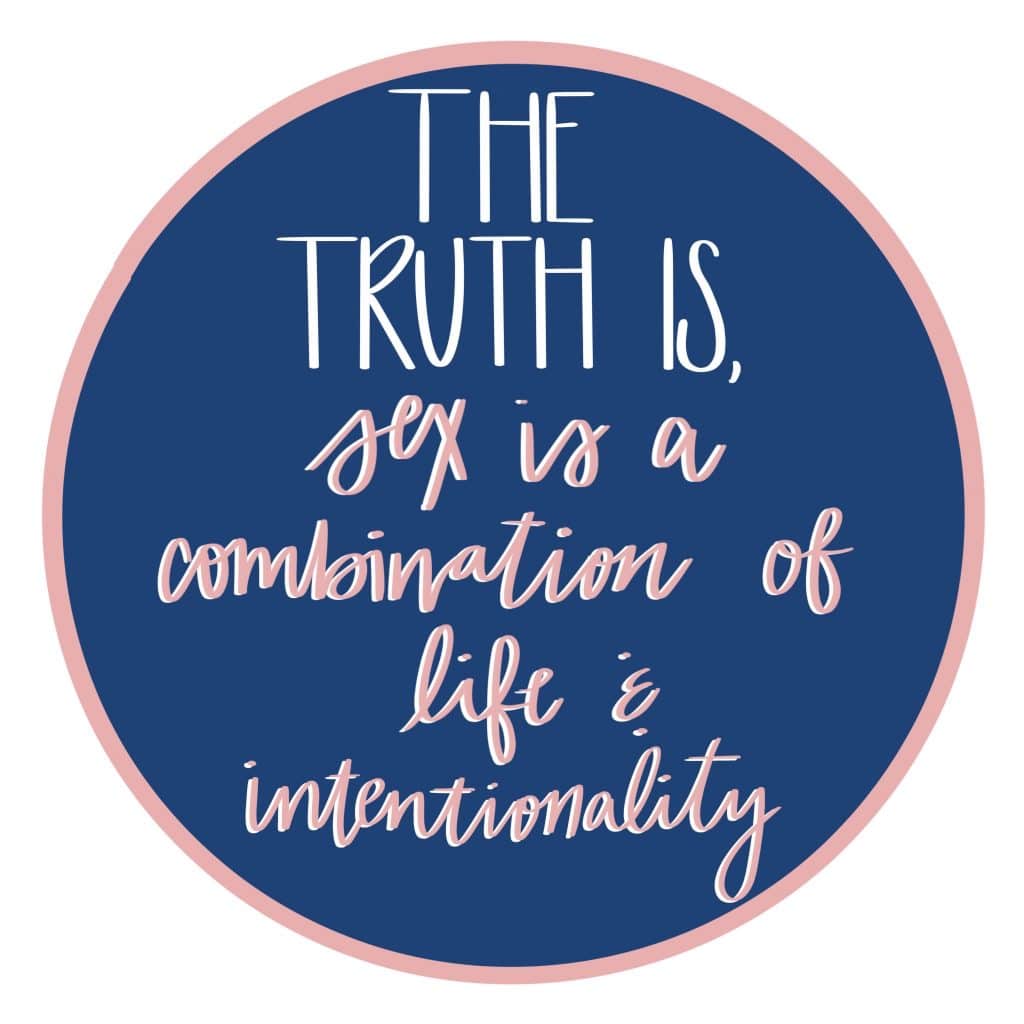
We’ve been conditioned to think sex is all about what happens once we get into the bedroom. But the truth is, sex is a combination of life and intention.
I feel like that sounds a little woo-woo, but you hear me, right?
Example: Let’s say your love language is words of affirmation, and your partner struggles to meet this love need for you. Words of affirmation help make you feel needed, loved, important, and safe. So, when you start getting in the mood for sexy time, but you find yourself having a difficult time getting aroused, it most likely doesn’t have anything to do with wanting to have sex. Instead, your basic, core needs are not being met.
Questions to Help You Better Understand Your Sex Drive, Brakes & Accelerators
Sometimes it can feel unclear to automatically know what makes us feel good and present in our bodies. I want you to know and deeply understand that this isn’t our fault. We weren’t taught how to listen to our bodies. So, I’m going to help you! Here are some helpful questions to ask yourself & your partner(s) to better understand what gets you feeling turned on or *spicy*.
- What makes me feel relaxed?
- What makes me feel present in my body?
- What doesn’t make me feel present? Or what makes me feel stressed?
- What quickly makes me feel “turned off?”
- What makes me feel “turned on?”
- What would ideal foreplay look like for me?
- What makes me feel connected to my partner(s)?
- After a long day filled with potential brakes, what helps bring me back to my body?
Remember—there is no right or wrong answer—there is only what feels good & true to YOU and your body. An answer could be super complex, or it could be as simple as “expectations for sex are a ‘turn off’ for me.”
Whatever feels true to you is your truth. Learning your brakes and accelerators can improve communication in your relationship(s) and lead to less sexy-time confusion (yay).
If you want more writing like this, you can browse my posts on education , relationships, product reviews, mental health and sex.
Related support
Explore Sex Therapy or Couples Therapy, then use the inquiry form to find the right therapist or coach for your needs.
Want help applying this to your real life?
If this brought something up for you, you do not have to sort through it alone. Explore therapy, coaching, workshops, and learning options built around direct, inclusive, shame-free support.