In this article
Need a little support with this?
Rachel’s work is shame-free, direct, and grounded in therapy-informed tools for sex, relationships, and mental health.
Shame-free note: Use this article as a starting point, not a scorecard. Take what helps, leave what does not, and come back to the parts that deserve more care.
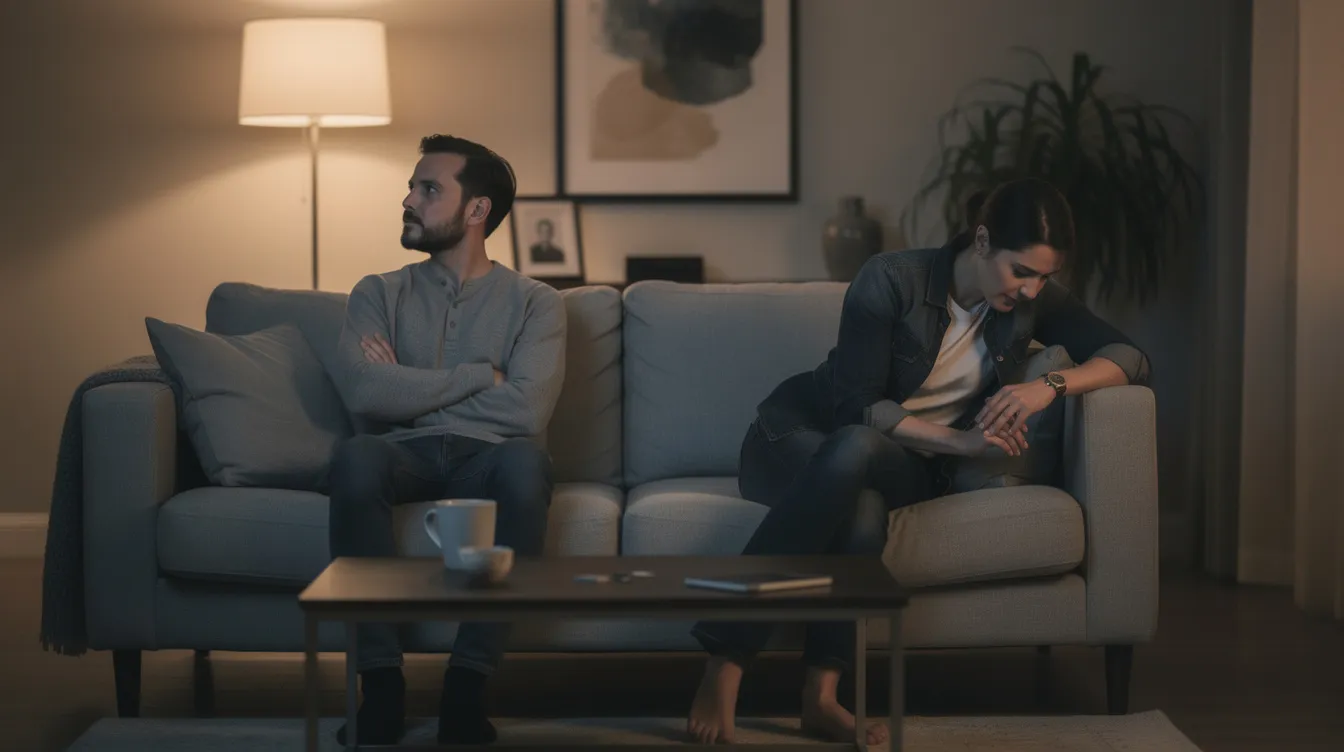
Most of us were never taught how to repair after a fight. We were taught how to win, how to be right, how to move on quickly, or shove it down, or even avoid conflict altogether until the next blow-up. But real repair is not about resolution in the traditional sense, it is about re-connection.
When a rupture happens in a relationship, whether it is a blowout argument or a quiet buildup of resentment, repair is the process that helps us return to safety with each other. It is what makes long-term connection possible, especially when there is pain, misunderstanding, or emotional distance.
What Repair After a Fight Is Not
Let’s begin by naming what repair is not, because so many of us are doing the best we can with what we were modeled, and what we were modeled was often incomplete at best and damaging at worst.
Repair is not simply saying “I’m sorry,” especially when the apology is vague, performative, or laced with defensiveness. It is not minimizing the other person’s experience with phrases like “I didn’t mean it that way,” “You’re overreacting,” or “Let’s not make this a big deal.” It’s not hoping that time will magically smooth things over, or saying nothing and pretending everything is fine once the intensity fades. It certainly is not saying “It won’t happen again” when there has been no reflection or change in behavior. And it’s most definitely not expecting forgiveness without making any kind of amends or changes. And it is certainly not attempting to fix the other person’s feelings so that you can feel more comfortable.
Many people mistake avoiding discomfort for repairing a relationship. In reality, that avoidance often creates a deeper rupture, especially if it becomes a repeated pattern.
As Dr. John Gottman’s decades of research shows, it is not the absence of conflict that predicts relationship satisfaction, but whether and how couples engage in repair. In his studies, couples who stayed together were not fighting less, they were finding ways to come back to each other even after conflict (Gottman & Silver, 1999). Repair after a fight is not about eliminating rupture, it’s about learning how to tend to the hurt or damage done.
What Repair After a Fight Actually Looks Like
Repair, when done well, includes acknowledging the impact even when the intention was different, making space for both people’s emotional realities, offering co-regulation before attempting to solve anything, and creating a mutual sense of safety and care so that trust can be rebuilt slowly and steadily.
This might look like:
- Saying “I know what I said was painful, and I want to take responsibility for that,” instead of “That’s not what I meant.”
- Checking in with “Do you want to talk about this now, or would it feel better to take a moment first?” instead of pushing for immediate resolution.
- Coming back with “I’m ready to talk if you are. I want us to be okay, and I care more about that than being right.”
- Listening with the goal of understanding, not defending or correcting
Repair isn’t about crafting the perfect response; it’s about showing up with emotional honesty, presence, and a willingness to hold what happened together.
Common Roadblocks to Repair After a Fight
Even when we know what repair should look like, actually doing it can feel like walking through mud, especially if there are old wounds, communication differences, or nervous systems that move at different speeds.
Flooding and Shutdown
When you are in fight, flight, freeze, or fawn, your brain is not capable of curiosity, empathy, or connection. In moments of emotional flooding, cortisol and adrenaline spike, impairing your ability to process language, tone, and facial expressions. This is why trying to repair while still dysregulated often leads to more disconnection or re-rupture (LeDoux, 1998).
The most helpful thing in these moments is to pause, soothe your nervous system, and come back to the conversation once you are grounded.
Competing Truths
Sometimes, repair stalls because two people remember the interaction differently. One says, “You raised your voice,” while the other insists, “No, I didn’t.” This back-and-forth can derail the entire repair process, especially if the focus shifts to proving who is right instead of addressing the impact.
You do not have to have the same memory to acknowledge that someone was hurt. Validation does not require agreement; it requires care.
Misaligned Timelines
One partner may want to talk immediately because the distance feels intolerable, while the other may need hours or even days to come down from the emotional spike. If repair is rushed too quickly, it can feel dismissive. If it is avoided for too long, it can turn into emotional neglect.
This is where clear communication helps. Saying “I want to talk about this, and I need a little more time to feel steady first,” offers reassurance and creates a path forward.
Shame and Defensiveness
Repair often collapses under the weight of internal shame. If your brain is flooded with thoughts like “I’m the problem,” “I’m a terrible partner,” or “I always mess things up,” it becomes nearly impossible to stay connected and open.
Defensiveness is often a way to protect yourself from shame, but it shuts down the possibility of meaningful repair. Practicing self-compassion in these moments, even internally, can be the difference between shutting down and staying engaged in the conversation. Dr. Kristin Neff’s research on self-compassion shows that it actually supports accountability and reduces the likelihood of repeating harmful behavior (Neff, 2003).
Repair After a Fight in Action: Scripts You Can Use
You know I like to make things tangible for you, so here are some real-life scenarios and ways to begin a repair conversation.
You shut down or walked away
“I know I shut down and walked out of the room. That probably left you feeling alone or abandoned. I wasn’t trying to punish you, I was overwhelmed and didn’t know what to say. I want to talk now/soon if you’re open to it.”
You raised your voice or got sharp
“I don’t feel good about the way I spoke to you. I got activated and let that come out in a way that felt harsh. You didn’t deserve that, and I’m sorry.”
You both got messy and hurt each other
“There was a lot that happened, and I know we both had moments we wish we could take back. Can we try to talk about what hurt and what we each need to move forward in a better way?”
You said something you didn’t mean
“What I said came from fear and frustration, not from how I actually feel about you. I hate that I said it, and I want to talk about what was underneath it.”
You feel stuck but want to reach out
“I don’t have all the right words, and I’m still sorting through my own feelings, but I care about you and I want to work through this. Are you open to talking?”
These scripts are not magic bullets. They are starting points; language that opens the door so that repair can actually begin.
Repair Isn’t Agreement — It’s Care
You do not have to see the situation the same way. You do not have to agree on exactly what happened. Repair is about recognizing that something painful occurred between you, and choosing to approach that pain with care instead of avoidance or self-protection.
In fact, most of the couples studied by Drs. John and Julie Gottman still experienced conflict years into their relationships. What made them successful was the consistent use of repair attempts that were received, not just offered, and a shared belief that connection mattered more than control (Gottman & Levenson, 1992).
Repair is a skill that can be learned, practiced, and improved. It requires vulnerability and boundaries. It asks us to stay connected to ourselves while reaching toward someone else. And when done well, it becomes one of the most powerful ways to build intimacy and trust.
If You Want Help With Learning How to Repair After a Fight
Repair is a skill, and like any skill, it takes time, guidance, and practice. This is the kind of work we focus on in some of my therapy and coaching work: learning the language, getting comfortable with discomfort, and building the emotional muscles for real re-connection.
If you’re ready to practice this in your own relationships, we’d love to support you.
Click here to fill out a quick form & I’ll be in touch soon!
SOURCES
- Gottman, J. M., & Silver, N. (1999). The Seven Principles for Making Marriage Work.
- LeDoux, J. (1998). The Emotional Brain: The Mysterious Underpinnings of Emotional Life.
- Neff, K. (2003). Self-compassion: An alternative conceptualization of a healthy attitude toward oneself.
- Ogden, P., Minton, K., & Pain, C. (2006). Trauma and the Body: A Sensorimotor Approach to Psychotherapy.
- Gottman, J. M., & Levenson, R. W. (1992). Marital processes predictive of later dissolution.
- Tatkin, S. (2011). Wired for Love: How Understanding Your Partner’s Brain Can Help You Defuse Conflict and Build a Secure Relationship.
If you want more writing like this, you can browse my posts on mental health and sex.
Related support
Explore Couples Therapy or Relationship Therapy, then use the inquiry form to find the right therapist or coach for your needs.
Want help applying this to your real life?
If this brought something up for you, you do not have to sort through it alone. Explore therapy, coaching, workshops, and learning options built around direct, inclusive, shame-free support.