In this article
Need a little support with this?
Rachel’s work is shame-free, direct, and grounded in therapy-informed tools for sex, relationships, and mental health.
Shame-free note: Use this article as a starting point, not a scorecard. Take what helps, leave what does not, and come back to the parts that deserve more care.
How to find the right sex toy for you? It can be confusing because there are all kinds of ways a sex toy can provide pleasure!
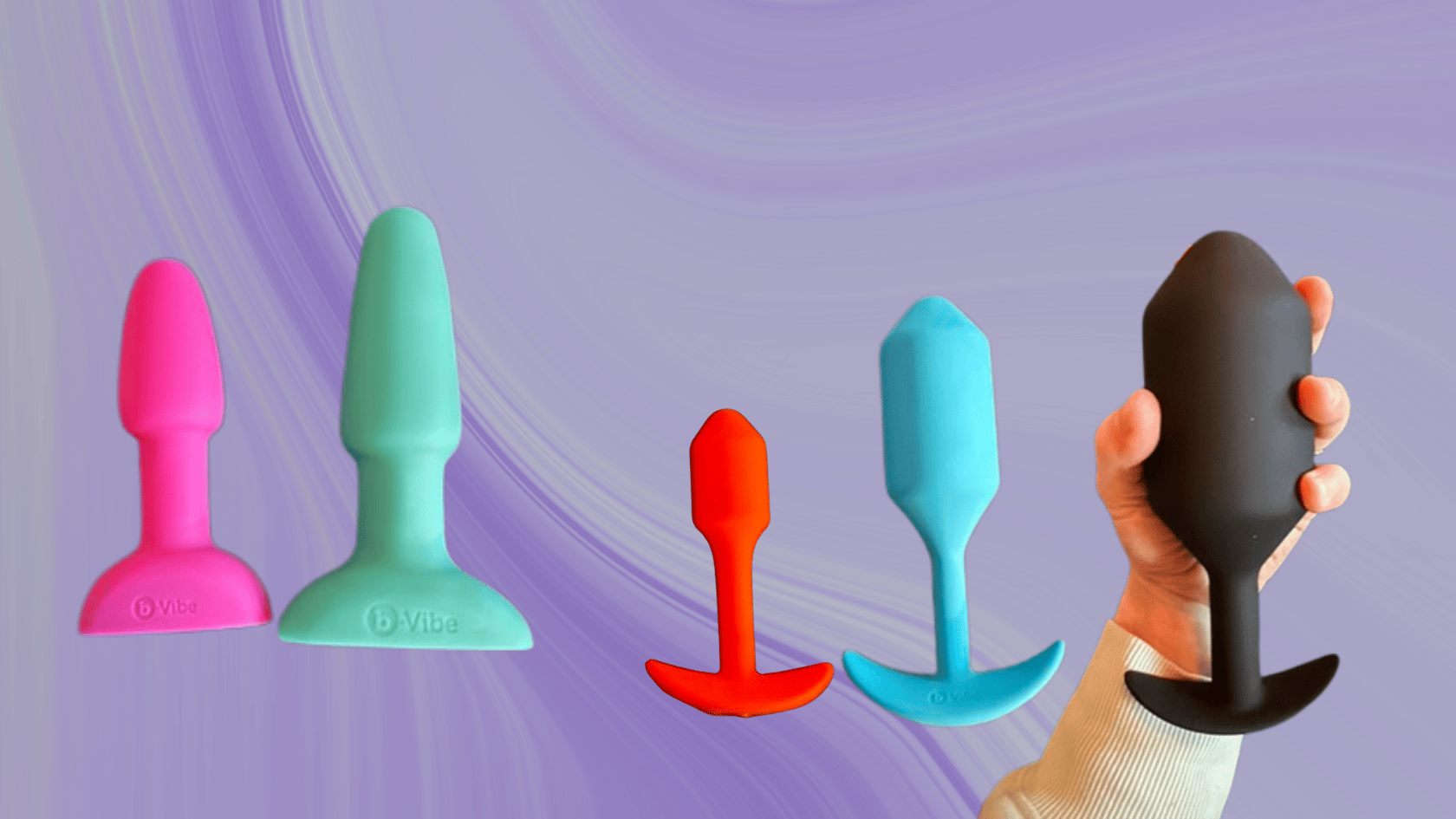
A toy without mechanical elements may be used for internal and external stimulation, such as a dildo or anal beads. Sometimes, the placement of certain items can assist or enhance an experience, like an anal plug or cock-ring. Finally, the sex toy’s movement or action can create a pleasurable sensation for the body!
When searching for “the right sex toy,” it’s vital to determine what kind of sensation you enjoy.
If you’ve decided that you’d like to explore vibrational toys, there’s another set of sensations to consider before you buy. What kind of vibration works for you?
Some common info you may see when looking to purchase a vibrating toy is:
- the toy’s intensity settings
- the patterns those vibrations take.
However, another important consideration is what kind of vibration the toy provides.
Two standard terms used for the different types of vibrations that lie at each end of the spectrum are “buzzy” and “rumbly.” But what’s the difference, and why are they important?
“Vibrations are mechanical oscillations. They can be described by frequency, amplitude, phase, and shape,” according to an article called The Physics of Vibration.
The Vibration Introduction fact sheet explains that a vibrating object is characterized by its frequency and amplitude. Then that determines how the vibration affects the air around it or the items it’s touching —in this case, a body!
What is Amplitude?
The amplitude is the measurement of the distance between the object’s stationary position and its furthest position on either side of the vibration. It’s similar to the difference between the radius and the diameter of a circle.
Frequency in “The Right Sex Toy”
Frequency is the number of times the object completes one full cycle of movement, starting from its stationary position, moving to the most extreme position on one side of the vibration, back to the stationary position, and then to the other side of the vibration. It is referred to as hertz.
These measurements can help explain the buzzy and rumbly sensations often described on sex toy packaging.
High-frequency (hertz in the thousands) and short-amplitude vibrations create a buzzy sensation. Low-frequency (hundreds of hertz) and longer-duration amplitude vibrations create a rumbly sensation.
You can read a post about this topic on Rachel’s Instagram by clicking here.
So, how do you know which is right for you?
Rumbly
A toy with rumbly vibrations penetrates deeper into the body because the waves created by the vibrations are larger and, therefore, have a greater effect on the space around it.
Clitoris-owning individuals may find this type of vibration enjoyable. When applied to the clitoral head, the movement vibrates more of the clitoris than just the head — creating a deeper sensation and orgasm.
Buzzy
For anyone who likes a lighter, tickling sensation or more surface-level feeling orgasm, a buzzy vibration may be a good pick. The waves of the vibrations are smaller and less affecting on the internal body.
In the end, listening, exploring, and playing in your solo and partnered sexual practices can help you determine which sensation you may enjoy most. Then, you can use that information to search for when planning your sex toy purchase. Hopefully, this gave you lots of info on how to find the right sex toy for you.
Ultimately, whichever sensation gives you the most pleasure is the one that’s right for you!
If you want more writing like this, you can browse my posts on mental health and sex.
Related support
If this article brought up something you want support with, these pages may be a helpful next step.
Want help applying this to your real life?
If this brought something up for you, you do not have to sort through it alone. Explore therapy, coaching, workshops, and learning options built around direct, inclusive, shame-free support.