
In this article
Need a little support with this?
Rachel’s work is shame-free, direct, and grounded in therapy-informed tools for sex, relationships, and mental health.
Shame-free note: Use this article as a starting point, not a scorecard. Take what helps, leave what does not, and come back to the parts that deserve more care.
Most of the questions I get about anal play for beginners start with some version of “is this normal, and where do I even begin?” The first part is easy. Yes, more normal than the cultural conversation suggests. The second part takes a little more time, which is part of why I wrote this.
A lot of folks come to this kind of exploration carrying years of confusing messaging from movies, porn, and the silence around the topic in basic sex education. By the time someone actually wants to try, they’ve often skipped past the foundational pieces that would have made the whole experience feel safer, less awkward, and way more pleasurable. So this guide is for the person who’s curious, who has questions they don’t quite want to ask out loud, and who wants a place to begin that goes beyond “watch a video and improvise.”
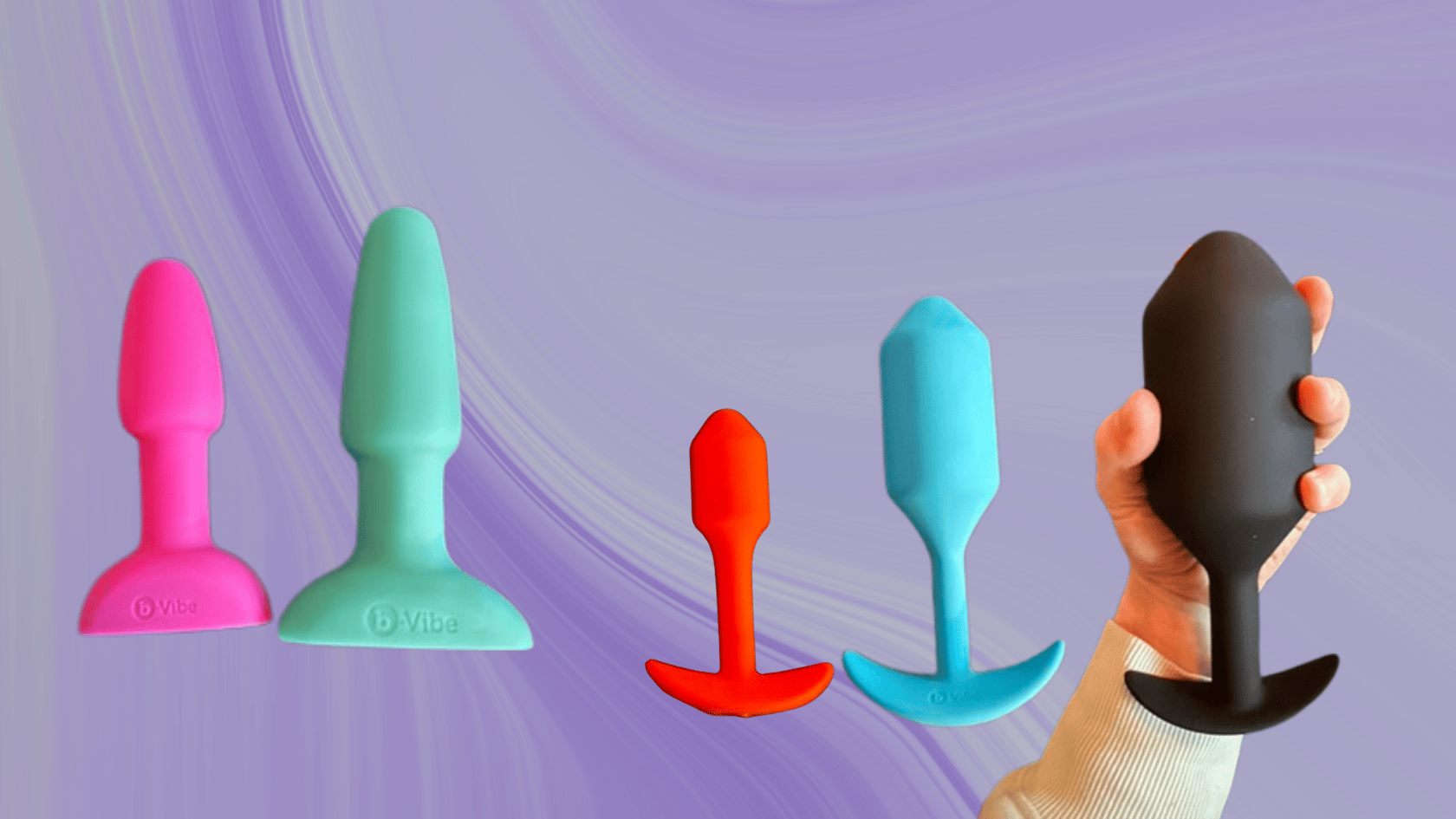
I’ve had the chance to spend time with the Snug Plug collection and the Rimming Plug 2 from b-Vibe over the last few months. Both were gifted by the brand; the opinions are my own, and my affiliate code is at the bottom if you want to grab anything I mention. I’ll walk you through both products, what they’re useful for, and the larger framework I share with my clients when they’re starting out.
What the research actually shows about anal interest
Anal play is waaaaaaaay more common than the cultural conversation may suggest. In Herbenick and colleagues’ 2010 national probability survey of sexual behavior in the United States, anal play of various kinds showed up across age groups, with significant percentages of both men and women reporting recent experience. Rowland and Tempel’s 2020 review in Current Sexual Health Reports looked at prevalence, motivation, and pleasure and reached a similar conclusion. People are exploring this; many of them are enjoying it, and the stigma doesn’t really align with the data.
Why does that matter? Because shame is what makes people skip it altogether, skip prep, rush past communication, and then conclude that anal play “isn’t for them” after a single uncomfortable experience. When folks understand that they’re part of a much larger group working through the same questions, the shame loosens, and the actual learning can begin.
Why starting small actually matters
I’ll say this part directly: most beginners go too big, too fast. The anal canal has more nerve endings than a lot of people realize, which is part of what makes this kind of play pleasurable, and also part of what makes it less forgiving when you skip steps. (It also doesn’t lubricate itself like a vagina does, so it adds a very crucial extra step!)
Starting small does a few things at once. It gives your body time to adjust to a new sensation without overwhelm, it lets you build trust between your nervous system and the experience itself (which is honestly half the work), and it makes it possible to notice what feels good before things escalate, instead of trying to figure that out under pressure.
I recommend a slow build, often over weeks rather than a single session, and ideally with a tool designed for graduated sizing. Which brings us to the Snug Plug.
The b-Vibe Snug Plug range: why it works for anal play for beginners
b-Vibe makes the Snug Plug in seven sizes, which is part of why it felt important to review in this guide. Most beginner-focused products give you one size and hope it fits. The Snug Plug lets you start with a Snug Plug 1 (about 0.86 inches at the widest point) and work up gradually, which is much closer to how a sex therapist (or pelvic floor PT) would actually pace this kind of exploration.
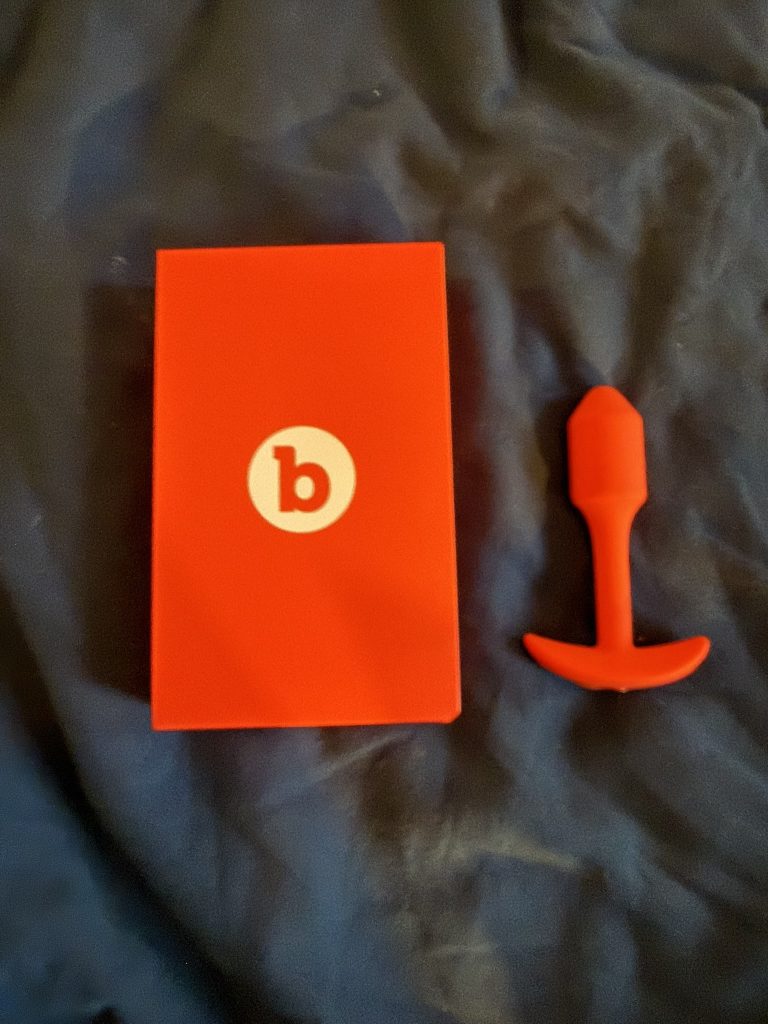
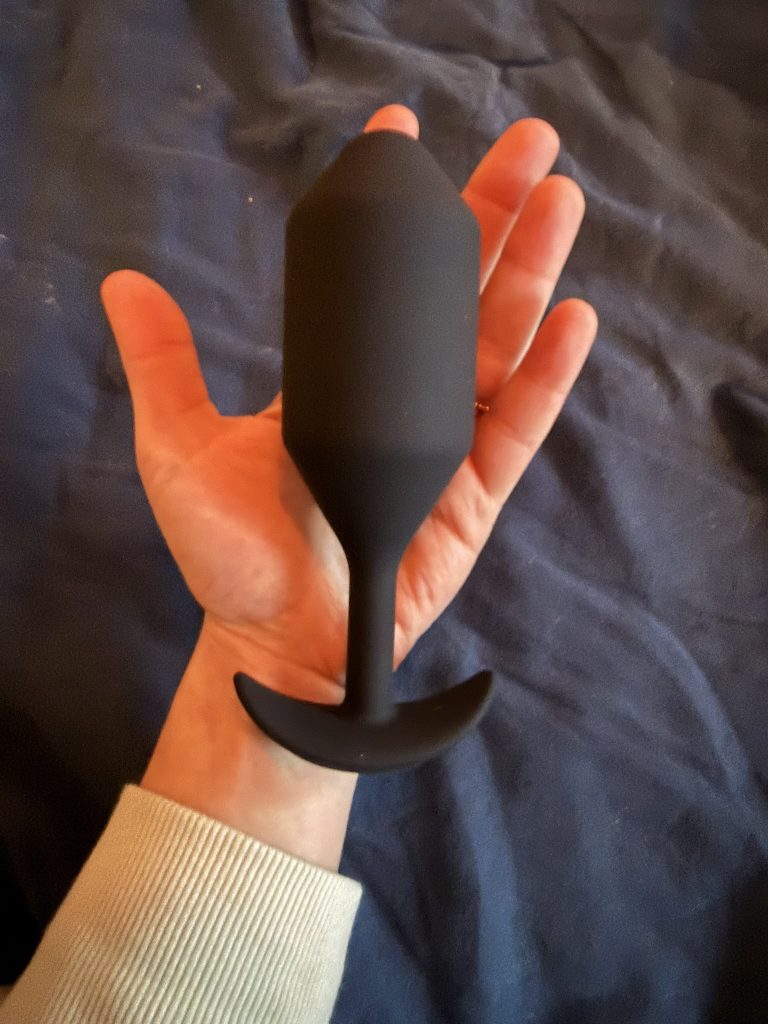
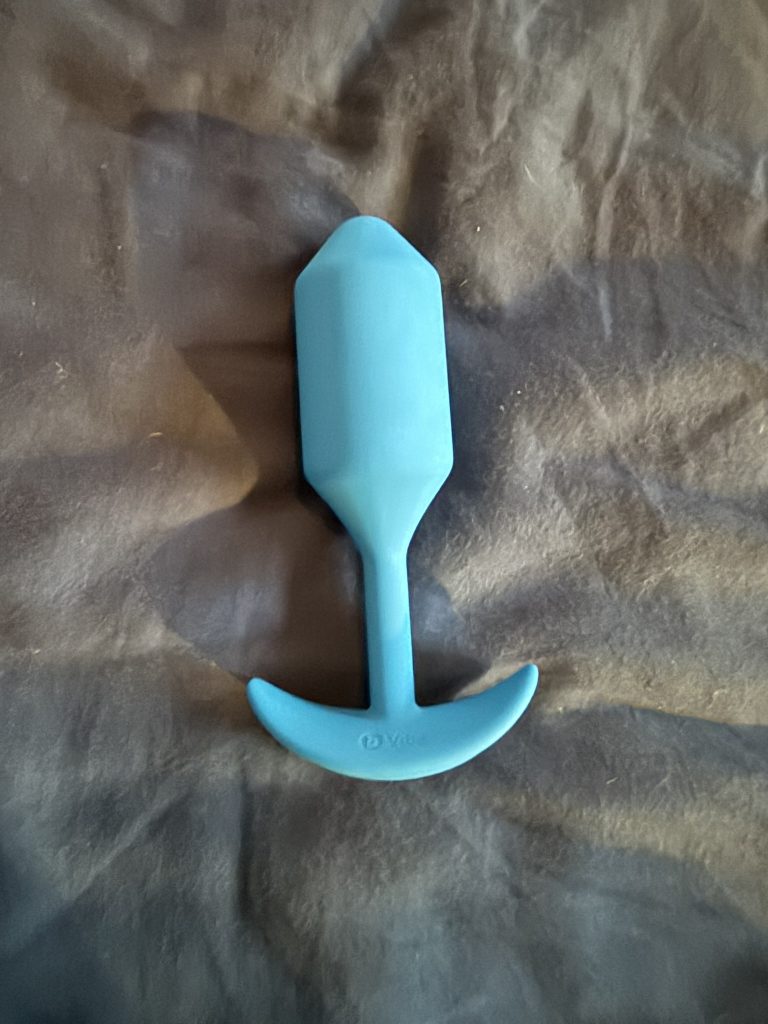
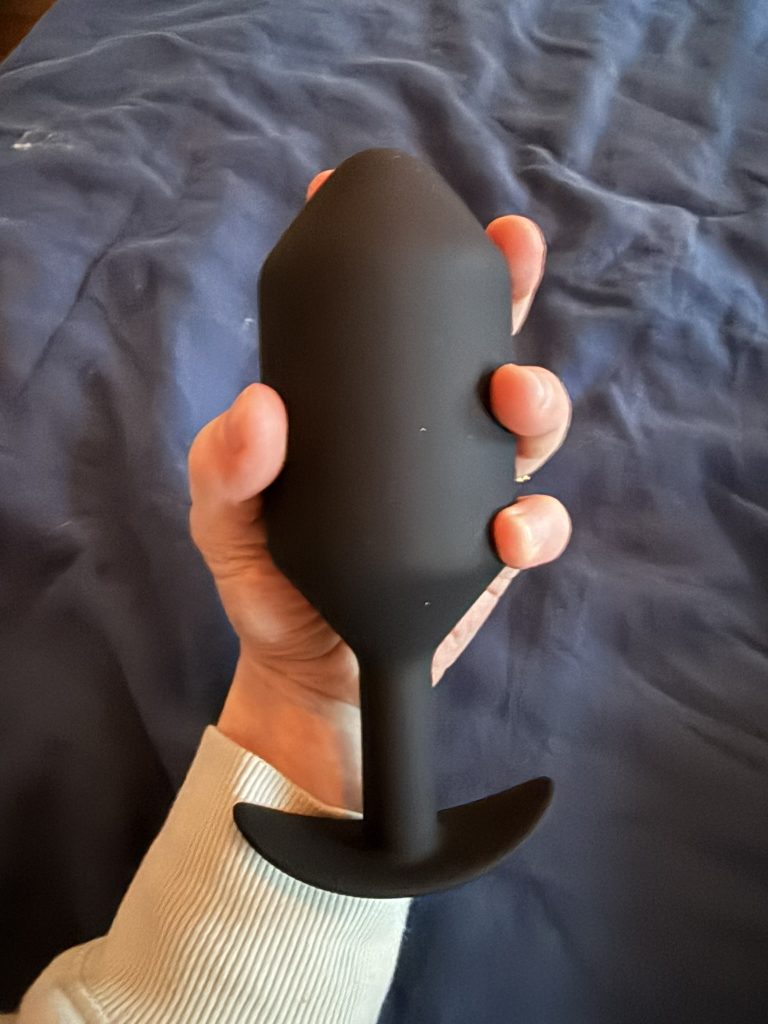
A few things I appreciated about this range: the weight inside each plug provides a feeling of fullness without requiring more circumference, so as you work up in size, you’re getting more sensation from the weight as much as from the size itself. The silicone is smooth and body-safe, with a tapered tip and a flared base, both of which are non-negotiables for any internal anal toy. And the shape stays put once it’s in, which makes it possible to wear during other kinds of partnered play or solo activity without constantly readjusting.
How I’d suggest using it: start with the 1 or 2 if this is genuinely new territory for you. Use plenty of water-based lube (do your best not to use silicone lube with a silicone toy). Spend the first few sessions just inserting and removing it, paying attention to what your body is telling you. Once that feels easy and pleasurable, work up to the next size. There’s no race here, and the people who progress fastest are usually the ones who let themselves go slowest at the start.
If you’re sharing the experience with someone else, I’d recommend that they be the one to insert it for the first time once you’ve practiced solo. That way, you can guide them in pacing, and they can pay attention to your body without having to manage their own technique under pressure.
Something fun you can do with your partner: get 2 of the same size and wear them together. Then, go up in size. Start to see how each of you grows and looks in the smaller and bigger sizes. You’ll get a feel for what it’s like to have it inside your body, while communicating about it (yay), and the exchange of “I’m inserting, and now you’re inserting” is really fun to play with.
The b-Vibe Rimming Petite & Plug 2: a (warm-up) tool for couples
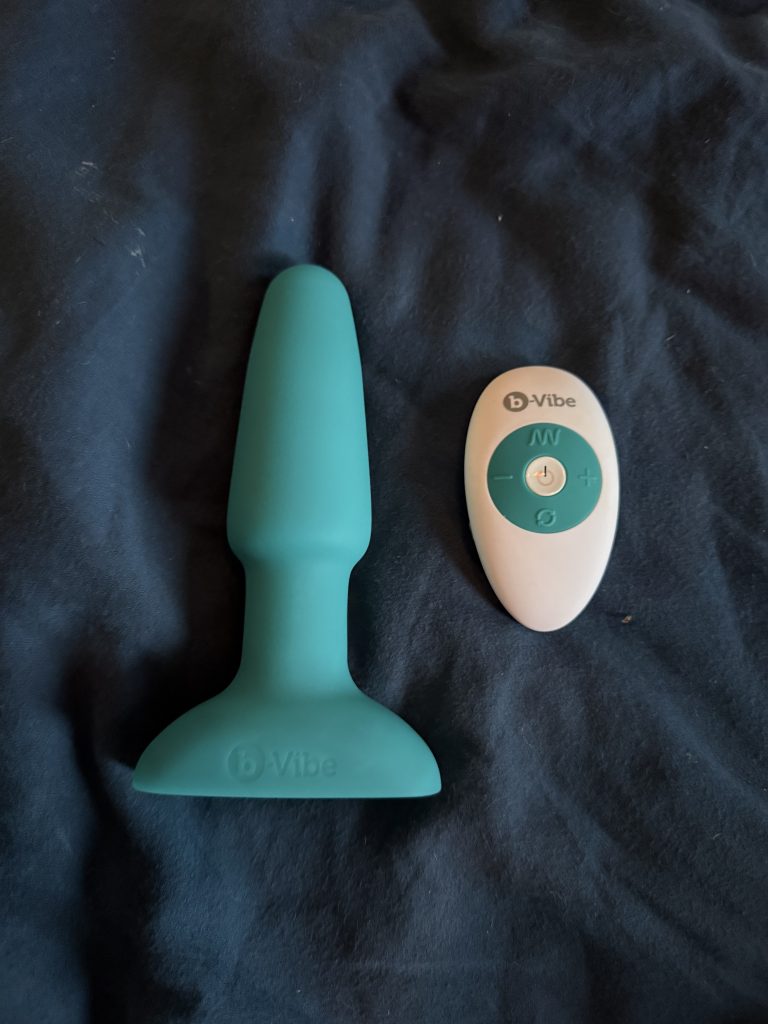
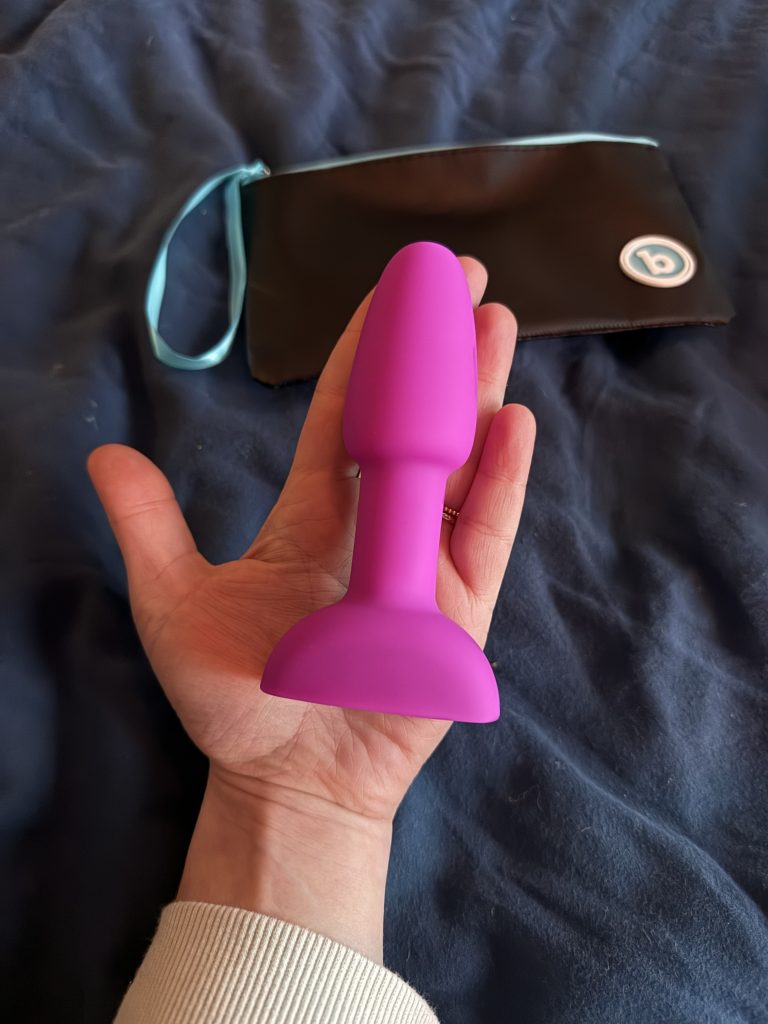
The Rimming Plugs sit in a different category. They’re built to deliver external sensation through rotating beads that mimic rimming, which is a specific kind of stimulation a lot of people find pleasurable but don’t always have access to.
Why I include it in a beginner guide: the rotating motion warms up the surrounding tissue and helps people relax into sensation before any deeper play happens. For couples exploring this together, it can take the pressure off either partner to perform a specific technique with their mouth or hands, lowering the stakes and increasing the chance of genuine enjoyment.
It’s smaller than most people expect, which is part of why I think it works for anal play for beginners. The body of the plug itself is modest in size, and the focus is really on the bead movement near the entrance. So you’re getting a lot of sensation in the part of the body that has the densest nerve endings, without committing to deeper internal play before you’re ready. Don’t let the size intimidate you. Relax, lots of lube… you’ve got this.
How I’d suggest using it: start solo if you’re more comfortable, and this one really shines as a partnered tool. Use it as part of foreplay, before any other kind of play, with the receiving partner giving constant feedback on what feels good (and what doesn’t). It has multiple speeds and rotation patterns, so play with the settings together. The partner who’s holding it has a kind of remote-control feel, which can make this a really connective experience if you let yourselves talk through it as you go.
Prep, lube, and the basics most people skip
A few things that change the experience entirely.
Lube is required for this kind of play. Unlike vaginal play, the anal canal doesn’t self-lubricate, so skipping lube makes everything harder, less pleasurable, and more likely to cause irritation or even tears. I recommend a thicker water-based lube for most beginners, since it stays put longer than thin formulas. Silicone lube is great for longevity, just check that it’s compatible with your specific toy. You can find my favorite lubes for anal play here.
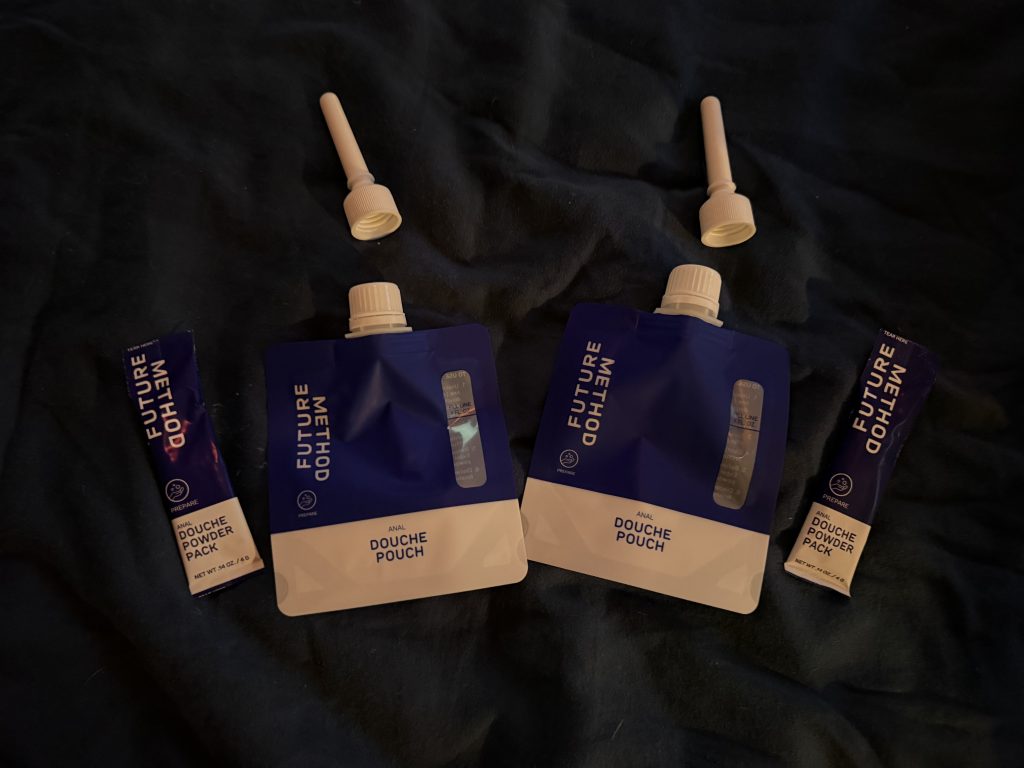
Prep matters more than people want to admit. This is one of the things that gets in the way of pleasure for a lot of folks: anxiety about cleanliness or a potential ‘mess’. Future Method makes a prep product designed to take the guesswork out, and it’s so easy to use across genders, helping ensure there’s no mess. Even a simple bowel movement and a thorough shower an hour before is enough for most kinds of anal play. Mess happens. You’re playing with asses. Just lean in. If it happens, clean it up and move on. The point of prep is that you’ve thought about it ahead of time, so you can stop thinking about it during.
Communication is the whole game. Talking before, during, and after is what separates a positive experience from a confusing one. Before: what are we hoping to try, and what feels off-limits today? During: how is this feeling? Do we want to keep going? Do we want more or less? After: what worked, what didn’t, what would you change next time? People skip this because it feels awkward, and then they wonder why the experience felt disconnected.
Common concerns I hear from folks
“What if it hurts?” Discomfort and pain are different signals. Some pressure or stretching at the start is common as your body adjusts. Sharp pain is your body telling you to stop, slow down, add more lube, or go smaller. Pain is information worth listening to every single time, and the move when it shows up is to back off and try again another day. Our bodies are so sensitive, and we need to listen to them.
“What if I’m doing it wrong?” Most people who feel they’re doing it wrong are actually moving too fast or not prepping enough. Anal play has basics worth following (lube, communication, going slow), and within that, a wide range of personal preferences. There’s room for plenty of different approaches once the basics are in place.
“Is it weird that I’m into this?” This research shows it’s a common interest across genders, orientations, and relationship structures. The cultural shame around it is louder than the data warrants. So, no, it’s not weird. You’re amazing.
“How do I bring this up with my partner?” I’d recommend bringing it up outside the bedroom first, in a low-pressure moment. Check out this free replay of my AEO workshop to learn how to literally bring up anything. Something like “I’ve been curious about exploring some sexy stuff with you. When would you be open to talking about it?” provides an invitation to a conversation that the person can consent to. If it turns into a longer talk, the b-Vibe products can be a concrete starting point, so you’re not just talking in the abstract.
TLDR
Anal play as a beginner comes down to a few things: starting small (the Snug Plug range is built for exactly this), using a warm-up tool when you’re playing with a partner (the Rimming Plug 2 is designed for that), prepping ahead with Future Method so you can stop worrying mid-play, using more lube than you think you need, and talking before, during, and after. The research is on your side, the stigma is louder than the actual prevalence, and you don’t have to figure this out alone.
If you want to grab any of the products mentioned here, you can find them at b-Vibe with my code RACHEL20 for 20% off.
Shop the Snug Plug range →
Shop the Rimming Plugs→
And if you’re working through bigger questions about pleasure, shame, or sex in your relationship, I have a few Intensive slots open for this summer. Shoot me a note if you want more info.
Affiliate disclosure
This post contains affiliate links from b-Vibe and Future Method. I was gifted the products mentioned. Using my links or the code RACHEL20 at b-Vibe gives you a 20% discount and earns me a small commission at no extra cost to you. All opinions are my own.
Disclaimer
This article is for educational purposes only. Engaging with this article is not therapy or medical advice, and nothing stated here should be taken as professional advice or as a replacement for therapy. The content here may or may not apply to you. If you’re in crisis or in an abusive situation, seek immediate support.
NY LMFT License #: 002632 | CA LMFT # 94435
References
Herbenick, D., Reece, M., Schick, V., Sanders, S. A., Dodge, B., & Fortenberry, J. D. (2010). Sexual behavior in the United States: Results from a national probability sample of men and women ages 14–94. The Journal of Sexual Medicine, 7(Suppl 5), 255–265.
Rowland, D. L., & Tempel, A. R. (2020). Anal intercourse and beyond: Prevalence, pleasure, and partnered sexual behavior. Current Sexual Health Reports, 12, 266–274.
Related support
If this article brought up something you want support with, these pages may be a helpful next step.
Want help applying this to your real life?
If this brought something up for you, you do not have to sort through it alone. Explore therapy, coaching, workshops, and learning options built around direct, inclusive, shame-free support.